
Why a Thermal Tank Is Essential for Decarbonizing Commercial Hot Water Systems
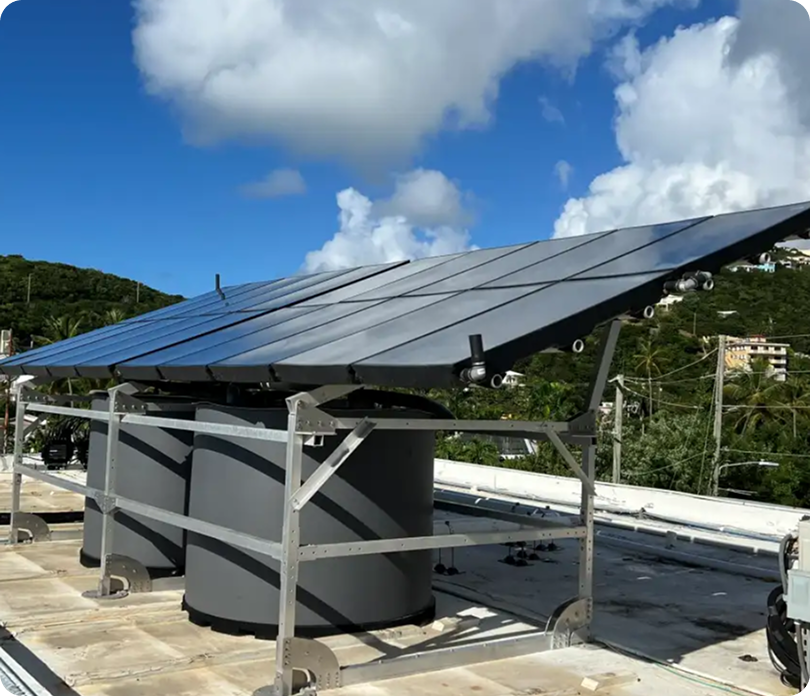
Decarbonizing commercial buildings is no longer a future ambition—it is an immediate operational and regulatory requirement. While space heating and HVAC electrification often dominate the conversation, commercial hot water systems remain one of the largest hidden sources of carbon emissions. Hotels, multifamily buildings, hospitals, laundries, and food-service facilities still rely heavily on fossil-fuel boilers to meet rigid, time-sensitive hot water demands.

A thermal tank, also known as a thermal storage tank or thermal energy storage system, plays a central role in solving this problem. It enables electrification without sacrificing performance, reduces system oversizing, and allows energy to be consumed when it is cleanest and cheapest. In short, thermal energy storage is the missing link between decarbonization goals and real-world hot water reliability.

The Decarbonization Challenge in Commercial Hot Water

Commercial hot water demand is fundamentally different from space heating. It is driven by human behavior, sanitation standards, and operational schedules rather than outdoor temperature. Peak usage windows—morning showers, kitchen service, medical sanitation—are fixed and unforgiving. Traditional boiler systems were designed to brute-force these peaks, resulting in oversized equipment that runs inefficiently most of the day. Simply swapping a gas boiler for electric resistance heating often worsens the problem by increasing electrical peak demand and infrastructure strain. Decarbonization requires not just electrification, but a new way to manage energy timing.

What a Thermal Tank Really Does (Beyond “Storing Hot Water”)

A modern thermal tank is best understood as a thermal battery, not a passive storage vessel. Its value lies in separating when energy is generated from when hot water is used.

A thermal tank enables three critical functions:

  • Decoupling energy production from demand, allowing heat pumps or renewables to operate steadily
  • Absorbing short-duration peak loads without oversizing generation equipment
  • Stabilizing system performance, reducing cycling, wear, and standby losses

This decoupling is what allows electric systems to outperform fossil-fuel boilers in real commercial conditions.

Electrification Works Only When Storage Is Present

Heat pumps are the backbone of low-carbon hot water systems because of their high coefficient of performance. However, they are optimized for continuous operation, not sudden demand spikes. Without thermal energy storage, designers are forced to oversize heat pumps or add electric resistance backup—both of which undermine efficiency and economics. Thermal tanks solve this mismatch by allowing heat pumps to run when conditions are optimal and store energy for later use. Electrification becomes scalable, predictable, and reliable only when storage is included as a core design element.

The BTU-to-kWh Math: Making Decarbonization Measurable

One of the strengths of thermal energy storage is that it makes hot water energy quantifiable. Engineers can directly convert water usage into electrical demand and carbon impact. Heating one gallon of water by 1°F requires approximately 8.34 BTU. For a typical commercial temperature rise, this translates into a clear electrical equivalent. Once demand is expressed in kilowatt-hours, it becomes possible to size systems accurately, compare technologies, and model emissions reductions with confidence.
Hot Water Scenario Assumed Condition Electrical Energy (kWh) Why This Matters
Heating baseline 1 gallon heated by 1°F 0.0024 kWh Establishes the physics behind all hot water energy calculations
Typical hot water use 1 gallon heated by 60°F ~0.15 kWh Converts gallons of demand into electrical load
Moderate draw event 100 gallons at 60°F rise ~15 kWh Shows how quickly electrical demand accumulates
Peak demand window 400 gallons at 60°F rise ~60 kWh Explains the need for thermal storage to avoid peak loads

Why Thermal Storage Changes System Design

Without storage, hot water systems must be sized to meet peak demand instantaneously. With storage, they are sized to meet daily energy needs, not momentary extremes.

The presence of a thermal tank allows designers to:

  • Reduce peak electrical demand by spreading energy input over time
  • Optimize heat pump sizing for efficiency rather than worst-case spikes
  • Improve system resilience by providing stored thermal capacity

This shift fundamentally changes how commercial hot water systems are engineered.

Talk to our experts about your energy situation today.

Boiler Downsizing: The Hidden Carbon Multiplier

One of the least discussed but most powerful benefits of thermal tanks is their ability to enable boiler downsizing in hybrid systems. When preheated water is supplied from a thermal storage tank, boilers no longer need to meet full peak demand. Instead, they serve a secondary role—topping off temperature or covering rare edge cases. This allows existing boilers to be retained longer, replaced with smaller units, or removed entirely over time. The result is a substantial reduction in fuel use, infrastructure cost, and lifecycle carbon emissions.

Load Shifting and Grid-Friendly Decarbonization

Electric grids are increasingly sensitive to when energy is consumed, not just how much. Time-of-use pricing, demand charges, and carbon-intensity variations all reward systems that can shift load intelligently.

Thermal energy storage supports grid-aligned operation by:

  • Charging during off-peak or low-carbon periods
  • Avoiding electricity consumption during peak grid stress
  • Reducing demand charges and infrastructure upgrades

In this way, thermal tanks transform hot water systems into flexible, grid-responsive assets.

Reliability Without Combustion

Decarbonization efforts often raise concerns about reliability. Thermal tanks address this directly by adding thermal inertia to the system. Stored energy provides a buffer against outages, equipment downtime, and sudden demand spikes. Because modern thermal tanks are typically unpressurized, corrosion-resistant, and modular, they also offer long service life and simplified maintenance compared to traditional steel tanks and combustion equipment.

Thermal Energy Storage as a Long-Term Strategy

Decarbonization is not a single retrofit—it is a progression. Thermal tanks enable that progression by creating a flexible foundation that can accommodate new energy sources over time.

Thermal energy storage future-proofs hot water systems by:

  • Supporting phased electrification strategies
  • Allowing integration of heat recovery, or advanced controls
  • Reducing risk as regulations and utility structures evolve

Buildings that install thermal storage today gain optionality rather than lock-in.

Why Thermal Tanks Are Becoming Essential, Not Optional

Commercial hot water systems are among the most difficult loads to decarbonize because failure is not tolerated. Thermal tanks solve this challenge by addressing energy timing, system sizing, and operational reliability simultaneously. They make electrification practical, boiler downsizing achievable, and grid interaction intelligent—all while delivering consistent hot water performance. In modern commercial buildings, thermal energy storage is no longer an accessory. It is the structural backbone of any credible decarbonization strategy.
Frequently Asked Questions (FAQs)
1. What is a thermal tank in a commercial hot water system?
A thermal tank is a thermal energy storage vessel that stores heat for later use, allowing commercial hot water systems to deliver hot water instantly without generating heat at the exact moment of demand.
2. How does a thermal tank support decarbonization?
Thermal tanks enable electrification by allowing heat pumps and renewable energy sources to operate efficiently while reducing reliance on fossil-fuel boilers, directly lowering carbon emissions from hot water systems.
3. Why is thermal energy storage necessary when using heat pumps?
Heat pumps operate best under steady conditions, while hot water demand is peaky. Thermal energy storage absorbs these peaks, preventing oversizing of heat pumps and reducing electrical demand spikes.
4. How does a thermal tank help reduce peak electrical demand?
By charging during off-peak hours and discharging during high-demand periods, a thermal tank shifts electrical load away from peak times, lowering demand charges and grid stress.
5. Can a thermal tank reduce the size of an existing boiler?
Yes. When used for preheating, a thermal tank significantly reduces peak load on boilers, allowing them to be downsized or used only as backup, which cuts fuel use and operating costs.
6. How much energy does hot water actually require?
Heating one gallon of water by a typical commercial temperature rise requires about 0.15 kWh. Thermal tanks store this energy in advance, avoiding the need for large, instantaneous power draw.
7. Are thermal tanks reliable for commercial applications?
Modern thermal tanks are designed for long service life, minimal maintenance, and high reliability, often using non-corrosive, unpressurized designs that outperform traditional steel tanks.
8. Is a thermal tank useful even if a building keeps its boiler?
Absolutely. Thermal tanks work effectively in hybrid systems by reducing boiler runtime, improving efficiency, and enabling gradual electrification without compromising hot water availability.