
High-Efficiency Solutions for Domestic Hot Water Systems

Domestic hot water (DHW) systems are among the most energy-intensive and operationally critical systems in commercial and multi-family buildings. Hotels, healthcare facilities, student housing, gyms, and large residential properties all depend on reliable hot water delivery every hour of the day. Yet many buildings still rely on outdated system designs that prioritize peak capacity over efficiency, longevity, and lifecycle cost.

Modern domestic hot water systems are no longer built around oversized heaters running at full output on demand. Instead, they are designed as integrated energy systems that combine thermal heat pumps, thermal tanks, and intelligent control strategies. This shift is driven by rising energy costs, electrification goals, and the need to extend DHW water system longevity while maintaining performance. This article explains how high-efficiency DHW solutions work, why thermal storage has become a core design element, and how daily load modeling and flow analysis transform hot water systems from reactive equipment into optimized infrastructure.

Why Traditional DHW Systems Struggle With Efficiency and Longevity

Conventional domestic hot water systems are typically designed for worst-case scenarios: peak morning demand, simultaneous usage, and emergency recovery. While this approach ensures hot water availability, it often leads to chronic inefficiencies. Boilers and heaters cycle aggressively, operate during peak energy pricing, and experience accelerated wear due to frequent start-stop operation. From real-world retrofit experience, the most common issues include excessive standby losses, premature component failure, and escalating operating costs. These systems may meet code requirements, but they rarely deliver long-term efficiency or resilience. High-efficiency DHW solutions address these problems by separating energy generation, energy storage, and energy delivery into distinct, optimized functions.

What Defines a Modern High-Efficiency Domestic Hot Water System

A modern DHW system is engineered around predictable usage patterns rather than instantaneous demand alone. Instead of producing heat only when taps are opened, the system stores thermal energy in advance and delivers it smoothly as needed. This approach reduces peak loads, stabilizes temperatures, and protects critical equipment. At the center of this design is the thermal tank, which acts as a thermal buffer. When paired with a thermal heat pump, the system can generate hot water using significantly less energy while extending equipment lifespan.

Core characteristics of modern DHW systems include:

  • Decoupling hot water production from hot water use
  • Operating heat pumps at steady, efficient load conditions
  • Using stored thermal energy to meet short-term demand spikes

These principles form the foundation of today’s most efficient domestic hot water installations.

Why Thermal Storage Matters in DHW System Design

Thermal storage changes the economics and reliability of domestic hot water systems. Instead of forcing heaters to respond instantly to fluctuating demand, a thermal tank absorbs variability and releases energy at controlled rates. This dramatically reduces system stress and energy waste. In buildings with predictable daily usage—such as hotels or apartment complexes—thermal storage allows energy to be generated during off-peak hours and used later without penalty. Over time, this strategy becomes one of the most effective ways to improve DHW water system longevity.

Key benefits of thermal storage in DHW systems:

  • Lower peak electrical or fuel demand
  • Reduced short-cycling of heaters and pumps
  • Improved temperature stability at fixtures

Thermal storage is not an accessory; it is the backbone of high-efficiency DHW system architecture.

Daily Load Modeling: Designing for How Buildings Actually Use Hot Water

Daily load modeling is one of the most important—and often overlooked—steps in DHW system design. Instead of sizing equipment based on peak flow alone, engineers model how hot water is used across a 24-hour period. This includes morning peaks, midday baseload, and overnight recovery. By understanding total daily energy demand rather than instantaneous flow, designers can right-size thermal heat pumps and storage volumes more accurately. This results in smaller equipment, lower capital costs, and better operating efficiency. In practice, daily load modeling reveals that many buildings use far less energy overall than their peak flow would suggest. Thermal tanks then bridge the gap between short-term spikes and long-term averages.

Flow Analysis: Matching Delivery to Demand

While daily load modeling focuses on energy, flow analysis focuses on water movement. Flow analysis examines how many fixtures operate simultaneously, how long they run, and how quickly hot water must be delivered to maintain user comfort. Proper flow analysis ensures that heat exchangers, piping, and valves are sized correctly so stored thermal energy can be converted into domestic hot water without bottlenecks. When combined with thermal storage, this allows systems to deliver high flow rates briefly without oversizing the entire heating plant.

What effective flow analysis achieves:

  • Prevents temperature drop during peak draw
  • Optimizes heat exchanger performance
  • Reduces the need for oversized heaters

Together, daily load modeling and flow analysis create DHW systems that are both efficient and reliable.

High-Efficiency Solutions for Domestic Hot Water Systems
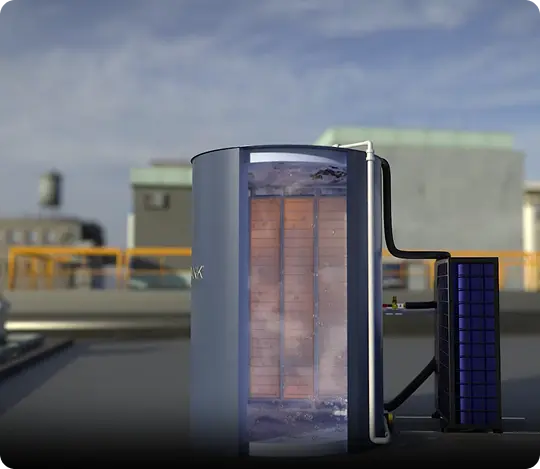
Domestic hot water (DHW) systems are among the most energy-intensive and operationally critical systems in commercial and multi-family buildings. Hotels, healthcare facilities, student housing, gyms, and large residential properties all depend on reliable hot water delivery every hour of the day. Yet many buildings still rely on outdated system designs that prioritize peak capacity over efficiency, longevity, and lifecycle cost.

Modern domestic hot water systems are no longer built around oversized heaters running at full output on demand. Instead, they are designed as integrated energy systems that combine thermal heat pumps, thermal tanks, and intelligent control strategies. This shift is driven by rising energy costs, electrification goals, and the need to extend DHW water system longevity while maintaining performance. This article explains how high-efficiency DHW solutions work, why thermal storage has become a core design element, and how daily load modeling and flow analysis transform hot water systems from reactive equipment into optimized infrastructure.

Talk to our experts about your energy situation today.

How Thermal Heat Pumps Elevate DHW Efficiency

Thermal heat pumps are a cornerstone of modern high-efficiency domestic hot water systems. Instead of converting electricity directly into heat, they move heat from ambient air or recovered sources into the thermal tank. This allows them to deliver multiple units of thermal energy for every unit of electricity consumed. When paired with thermal storage, heat pumps can operate continuously at optimal efficiency rather than cycling on and off. This not only reduces energy use but also extends compressor and component life.

Advantages of thermal heat pumps in DHW systems:

  • Significantly lower energy consumption than resistance heating
  • Reduced operating costs over the system lifecycle
  • Compatibility with electrification and decarbonization strategies

In many commercial applications, the combination of heat pump plus thermal tank delivers the highest efficiency gains available today.

Where High-Efficiency DHW Solutions Deliver the Most Value

Not all buildings benefit equally from advanced DHW systems, but those with recurring and predictable usage patterns see the strongest returns. Hotels, healthcare facilities, student housing, and multi-family buildings often experience concentrated demand that is ideal for thermal storage strategies. In these environments, high-efficiency solutions reduce operating costs while improving service reliability—two outcomes that rarely coexist in traditional systems.

The Long-Term Impact on DHW Water System Longevity

One of the most measurable benefits of modern DHW systems is extended system life. By reducing peak stress, minimizing cycling, and stabilizing operating conditions, thermal tanks and heat pumps significantly slow component degradation. Over a 15–25 year lifecycle, this translates into fewer replacements, lower maintenance costs, and more predictable performance. For owners and operators, improved DHW water system longevity often justifies the initial investment even before energy savings are considered.

Final Thoughts: Why Thermal Storage Defines the Future of DHW Systems

High-efficiency solutions for domestic hot water systems are no longer optional upgrades—they are becoming the default approach for forward-looking buildings. By combining thermal heat pumps, thermal tanks, and data-driven design methods like daily load modeling and flow analysis, modern DHW systems deliver lower costs, higher reliability, and longer service life. Thermal storage matters because it aligns energy production with real-world usage, transforming domestic hot water from a reactive utility into a strategic energy system. For buildings seeking efficiency without compromise, this approach represents the future of domestic hot water design.
Frequently Asked Questions (FAQs)
1. What is a domestic hot water (DHW) system?
A domestic hot water system is the equipment and infrastructure used to heat, store, and distribute hot water for sinks, showers, kitchens, and sanitation in residential and commercial buildings.
2. Why do modern DHW systems use thermal storage tanks?
Thermal storage tanks allow hot water energy to be generated in advance and used when needed, reducing peak energy demand, improving efficiency, and stabilizing delivery temperatures.
3. How does a thermal heat pump improve DHW efficiency?
A thermal heat pump moves heat from ambient or recovered sources instead of generating it directly, producing multiple units of hot water energy for every unit of electricity consumed.
4. What is daily load modeling in DHW system design?
Daily load modeling analyzes total hot water energy use over a 24-hour period, enabling systems to be sized for actual demand rather than extreme peak conditions.
5. How does flow analysis affect hot water performance?
Flow analysis evaluates simultaneous water usage and delivery rates, ensuring pipes, heat exchangers, and controls are properly sized to maintain stable temperatures during peak draw.
6. Do high-efficiency DHW systems last longer?
Yes. By reducing equipment cycling and operating at stable conditions, modern DHW systems significantly improve DHW water system longevity and lower maintenance needs.
7. Which buildings benefit most from thermal storage-based DHW systems?
Hotels, healthcare facilities, student housing, and multi-family buildings benefit most due to predictable usage patterns and recurring peak demand.
8. Are thermal tanks and heat pumps future-proof solutions?
Yes. Thermal tanks and thermal heat pumps support electrification, energy cost control, and long service life, making them well suited for long-term building infrastructure planning.