
How Thermal Tank Retrofit Solutions Transform Legacy DHW Systems into High-Efficiency Thermal Batteries

Legacy domestic hot water (DHW) systems in commercial buildings were rarely designed for today’s demand patterns. Increased occupancy, evolving usage behaviors, and higher efficiency expectations have pushed older systems beyond their original capacity. In real-world retrofit projects across hotels, multifamily buildings, and healthcare facilities, the core issue is not always insufficient heating—it is the lack of effective storage.
This is where thermal tank retrofit solutions deliver transformative value. By integrating a modular DHW thermal tank into an existing system, facilities can convert outdated infrastructure into a high-efficiency thermal battery. Instead of reacting to demand spikes, the system begins to store energy in advance and deploy it strategically—improving performance, reducing stress, and lowering operating costs.
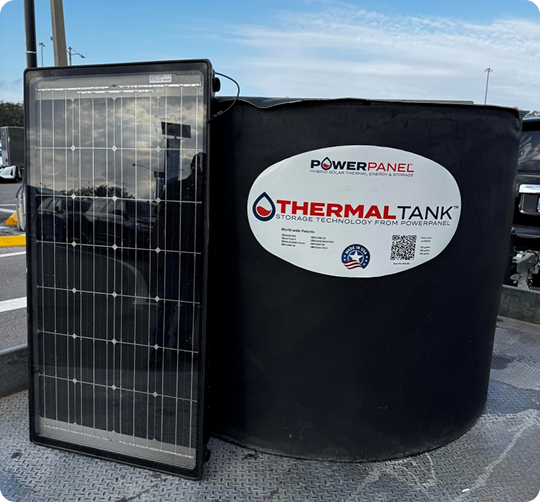
Understanding the Limitations of Legacy DHW Systems

Most legacy DHW systems were built around instantaneous heating assumptions. Boilers or heating units were expected to ramp up quickly to meet demand. While this worked under lower occupancy conditions, it becomes inefficient when demand patterns intensify. Morning peak usage in hotels, synchronized residential demand in multifamily properties, and continuous requirements in healthcare facilities all create rapid load spikes. These spikes force heating systems to operate at maximum capacity, often repeatedly throughout the day. Without adequate storage, the system cycles aggressively, increasing wear and reducing efficiency. Temperature inconsistencies and delayed hot water delivery become common. Legacy systems are not inherently flawed—they are simply incomplete without storage capacity that can buffer demand fluctuations.

How Thermal Tank Retrofit Solutions Work

Thermal tank retrofit solutions enhance existing DHW systems by adding storage capacity without replacing the primary heating plant. Instead of forcing boilers or heat pumps to respond instantly to every demand spike, the system begins to store thermal energy in advance. This stored energy is then deployed during peak demand periods, reducing the load on heating equipment. The retrofit effectively converts the system into a thermal battery—charging during low-demand intervals and discharging during peak usage.

Core retrofit functions

  • Store heated water ahead of demand spikes
  • Reduce peak load on existing heating equipment
  • Stabilize system performance during high-use periods
  • Extend the lifespan of legacy infrastructure

By integrating storage, facilities shift from reactive operation to controlled energy management.

What Are Thermal Tank Retrofit Solutions?

Thermal tank retrofit solutions involve integrating a modular DHW thermal tank into an existing commercial hot water system to increase storage capacity and improve efficiency. Instead of replacing the entire heating plant, these solutions enhance system performance by storing thermal energy in advance of demand. The retrofit allows the system to operate as a thermal battery—charging during low-demand periods and supplying hot water during peak usage. This reduces demand spikes, improves temperature consistency, and extends the life of heating equipment. For legacy systems, retrofit storage is one of the most effective ways to modernize performance without major infrastructure replacement.

The Role of Modular DHW Thermal Tanks in Retrofits

A modular DHW thermal tank is central to modern retrofit strategies. Unlike traditional large, fixed tanks, modular systems are built from scalable components that can be assembled on-site. This flexibility is essential in retrofit environments where mechanical room access, structural limitations, and space constraints often restrict installation options.

Advantages of modular systems

  • On-site assembly in confined or existing spaces
  • Incremental capacity expansion as demand grows
  • Simplified transport and installation logistics
  • Adaptability to various building configurations

Modular design ensures that storage capacity aligns with real-world conditions rather than forcing buildings to adapt to rigid system designs. This makes retrofits more practical and cost-effective.

Converting DHW Systems into Thermal Batteries

The concept of a thermal battery is straightforward: store energy when it is easy to produce and use it when demand peaks. In DHW systems, this means heating water during lower-demand periods and storing it for later use. When a modular DHW thermal tank is integrated into a legacy system, the transformation is immediate. Instead of reacting to every demand spike, the system delivers stored hot water instantly. This reduces the need for rapid cycling of heating equipment. From an operational perspective, the system becomes more predictable. Peak demand is flattened, and temperature delivery becomes consistent. This shift from reactive to proactive energy management is what defines a high-efficiency thermal battery system.

Performance Improvements After Retrofit Integration

Retrofit storage integration produces measurable performance improvements across multiple areas. The most immediate benefit is reduced strain on heating equipment. By offloading peak demand to storage, boilers and heat pumps operate in longer, more stable cycles.

Key performance gains

  • Reduced peak demand and demand charges
  • Improved temperature consistency during high usag
  • Lower cycling frequency of heating equipment
  • Extended equipment lifespan and reduced maintenance

These improvements are not theoretical—they are observed consistently in retrofit projects. Facilities that integrate storage see more stable operation and fewer system disruptions, particularly during peak usage windows.

Talk to our experts about your energy situation today.

Installation Considerations for Retrofit Projects

Successful retrofit implementation depends on accurate planning and execution. Installing a modular DHW thermal tank requires understanding the building’s draw profile, peak demand characteristics, and existing system limitations.

Critical installation factors

  • Detailed analysis of peak demand and usage patterns
  • Structural assessment for load distribution
  • Integration with existing heating and circulation systems
  • Insulation continuity to minimize heat loss

Because retrofits often occur in active buildings, minimizing disruption is also a priority. Modular systems allow phased installation and faster deployment compared to traditional tank systems. Proper planning ensures that the retrofit delivers maximum performance improvement without operational downtime.

Long-Term Financial and Operational Benefits

Thermal tank retrofit solutions provide long-term value by improving efficiency and reducing operating costs. By flattening demand spikes, facilities often lower utility demand charges significantly. More stable heating cycles reduce wear and extend equipment life. Operationally, the system becomes more resilient. Stored thermal energy provides a buffer during maintenance or temporary equipment downtime, ensuring continuous hot water availability. Over time, these benefits compound. Reduced maintenance costs, improved efficiency, and lower energy consumption contribute to a strong return on investment. For commercial buildings, retrofit storage is not just an upgrade—it is a strategic improvement that enhances both performance and financial outcomes.

Why Do Thermal Tank Retrofit Solutions Improve Efficiency?

Thermal tank retrofit solutions improve efficiency by allowing heating systems to operate in steady, optimized cycles rather than reacting to sudden demand spikes. By storing thermal energy in advance, the system reduces peak load and minimizes inefficient rapid cycling. This leads to better fuel or energy utilization, lower demand charges, and reduced mechanical wear. When integrated with modular DHW thermal tanks, retrofit systems provide scalable storage that adapts to building needs. The result is a more efficient, reliable, and cost-effective hot water system for commercial applications.

Conclusion

Thermal tank retrofit solutions are transforming how legacy DHW systems operate in commercial buildings. By integrating a modular DHW thermal tank, facilities can convert outdated infrastructure into high-efficiency thermal batteries. This transformation delivers immediate and long-term benefits—reduced peak demand, improved temperature consistency, lower operating costs, and extended equipment life. Instead of replacing entire systems, retrofits provide a targeted, scalable solution that enhances performance without disruption. For hotels, multifamily properties, healthcare facilities, and other high-demand environments, the shift toward thermal storage is no longer optional. It is a practical and proven strategy for modernizing hot water systems and achieving reliable, efficient performance in today’s demanding operational landscape.
Frequently Asked Questions (FAQs)
1. What are thermal tank retrofit solutions?
Thermal tank retrofit solutions involve adding a modular DHW thermal tank to an existing hot water system to increase storage capacity, reduce peak demand, and improve overall system efficiency without replacing the entire heating plant.
2. How do thermal tank retrofit solutions turn systems into thermal batteries?
They store heated water during low-demand periods and release it during peak usage. This allows the system to act like a thermal battery—charging and discharging energy to stabilize performance and reduce load spikes.
3. What is a modular DHW thermal tank?
A modular DHW thermal tank is a scalable hot water storage system built from multiple components that can be assembled on-site. It allows flexible installation and future expansion based on building demand.
4. Can retrofit solutions be applied to older buildings?
Yes. Thermal tank retrofit solutions are specifically designed for legacy systems, allowing buildings to improve performance, increase capacity, and reduce strain on existing heating equipment without full system replacement.
5. How do retrofit thermal tanks reduce operating costs?
They reduce peak demand charges, improve heating system efficiency, and lower maintenance needs by minimizing rapid cycling and mechanical stress on equipment.
6. What types of buildings benefit most from thermal tank retrofits?
Hotels, multifamily properties, healthcare facilities, resorts, and industrial laundries benefit most due to their high and peak-driven hot water demand.
7. How long does a thermal tank retrofit installation take?
Installation timelines vary by project size, but modular systems typically allow faster installation compared to traditional tanks, often minimizing downtime and operational disruption.
8. Does adding a modular DHW thermal tank extend equipment life?
Yes. By reducing peak load stress and improving operating cycles, retrofit storage systems help extend the lifespan of boilers, heat pumps, and other heating equipment.