
Overcoming Mechanical Room Thermal Tank Access Challenges with Modular Design
Mechanical room thermal tank access has long been a major challenge in commercial buildings and industrial facilities, where traditional systems are often bulky and difficult to install. As energy systems evolve toward thermal energy storage and decarbonization, the need for flexible solutions has become critical. A thermal storage tank acting as a thermal battery must not only deliver performance but also fit within tight infrastructure constraints. This is where modular thermal systems are transforming the industry. By enabling easy transport, assembly, and installation, modular designs overcome physical access limitations while supporting integration with heat pumps, solar thermal systems, and HVAC systems, ensuring optimized energy efficiency and operational flexibility.
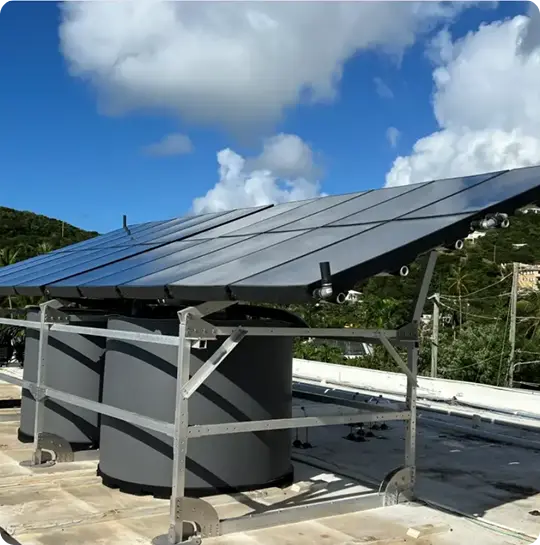
Why is mechanical room thermal tank access a major challenge in modern buildings?
Mechanical room thermal tank access is challenging because traditional tanks are large, rigid, and difficult to transport through confined spaces in commercial and industrial buildings. Mechanical room thermal tank access issues arise due to the physical limitations of existing infrastructure, particularly in older commercial buildings where mechanical rooms were not designed for modern thermal energy storage systems. Traditional tanks are large, heavy, and often require cranes or structural modifications for installation. This creates logistical challenges and increases project costs. In addition, tight doorways, narrow hallways, and limited ceiling heights restrict movement, making it difficult to install or replace a thermal storage tank. These constraints directly impact the adoption of thermal tanks for decarbonization, as businesses may delay upgrades due to installation complexity. As demand for energy efficiency grows, solving these access challenges becomes essential for enabling widespread deployment of advanced thermal systems.
How do modular thermal systems solve access limitations in mechanical rooms?
- Easy transport through narrow access points
- On-site assembly within confined mechanical rooms
- Reduced installation time and labor costs
- Scalability by connecting multiple units
- Compatibility with existing infrastructure
These features make modular solutions ideal for modern energy systems.
What role do thermal tanks play in decarbonization and energy efficiency?
How do modern thermal storage tanks enhance installation flexibility and performance?
Key performance features include:
- High-performance insulation reducing thermal loss
- Efficient heat exchangers for optimal energy transfer
- Modular design enabling flexible installation
- Long lifespan with non-corrosive materials
- Seamless integration with heat pumps and HVAC systems
These innovations ensure that modern thermal tanks deliver both operational efficiency and installation flexibility.
Real-World Applications of Modular Thermal Tank Systems
Talk to our experts about your energy situation today.
Integration with Heat Pumps and Renewable Energy Systems
Key integration benefits include:
- Improved energy efficiency through renewable energy usage
- Reduced carbon emissions supporting decarbonization
- Enhanced load shifting for cost optimization
- Lower operational costs through efficient energy use
- Increased system resilience and reliability
This integration ensures that modular systems deliver both sustainability and performance benefits.
Design Considerations for Mechanical Room Installations
The Future of Mechanical Room Thermal Tank Access Solutions
Key future trends include:
- Increased adoption of modular thermal systems
- Reduced carbon emissions supporting decarbonization
- Expansion of thermal tanks for decarbonization initiatives
- Improved system scalability for growing energy demands
- Greater compatibility with advanced HVAC systems
These developments will ensure that thermal tanks remain a cornerstone of efficient, sustainable energy infrastructure.