
Non-Pressurized Thermal Tank Systems for Commercial Energy Storage and Hot Water

Commercial buildings are under increasing pressure to improve efficiency, reduce peak demand, and extend equipment life—without replacing entire mechanical plants. In large hotels, multifamily properties, healthcare facilities, and industrial operations, hot water systems are often the most stressed infrastructure in the building. From hands-on system evaluations and retrofit planning, one pattern is consistent: pressure-driven storage systems introduce long-term structural stress and operational inefficiencies. A non-pressurized thermal tank changes that equation. When deployed as part of strategic thermal tank retrofit solutions or integrated as a modular DHW thermal tank, this approach delivers safer operation, scalable storage, and measurable performance gains in commercial energy storage and hot water systems.
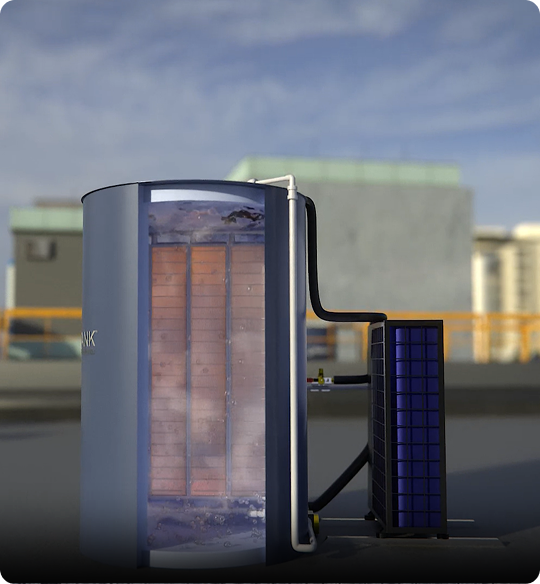
Understanding Non-Pressurized Thermal Tank Systems

A non-pressurized thermal tank operates at atmospheric or near-atmospheric pressure rather than containing water under high internal pressure. Instead of storing pressurized domestic hot water directly, it stores heated water that transfers energy via internal heat exchangers. This distinction matters significantly in commercial systems. Pressurized tanks are exposed to cyclical stress as temperatures and pressures fluctuate throughout the day. Over time, this can contribute to material fatigue, joint stress, and maintenance demands.
By contrast, non-pressurized systems reduce structural strain and allow for greater design flexibility. They act as energy reservoirs, storing thermal capacity in advance of demand spikes. In high-capacity commercial environments, this architecture improves reliability and lowers long-term operational risk.

Why Pressure Reduction Improves Longevity

In large hot water plants, pressure is more than a mechanical parameter—it is a lifecycle factor. Every pressurization cycle applies stress to tank walls, weld seams, and fittings. As temperature fluctuates, expansion and contraction accelerate wear. Non-pressurized storage minimizes these stress cycles. Because the tank is not subjected to high internal pressure, structural fatigue is significantly reduced. This extends service life and reduces inspection complexity. Additionally, lower-pressure systems allow more versatile material selection and insulation integration. Over time, reduced structural strain translates into fewer failure points and lower maintenance frequency. In commercial facilities where uptime is critical, this durability advantage becomes a central driver of long-term performance stability.

How Non-Pressurized Systems Support Commercial Energy Storage

Commercial hot water demand rarely follows a flat curve. Morning peaks in hotels, synchronized multifamily usage, and batch processes in laundries create sharp spikes. Without storage, heating systems must instantly ramp to meet load. A non-pressurized thermal tank decouples heat generation from usage. Energy is generated gradually—often during lower-demand windows—and stored for deployment during peaks. This flattens the demand curve and stabilizes system operation.

Energy storage advantages

  • Reduced peak demand spikes
  • Smoother operation of boilers or heat pumps
  • Lower utility demand charges
  • Improved temperature consistency during surge events

By functioning as a thermal battery, the storage tank ensures predictable hot water delivery while reducing strain on primary heating infrastructure.

What Is a Non-Pressurized Thermal Tank?

A non-pressurized thermal tank is a commercial energy storage system that stores heated water at atmospheric pressure and transfers energy to domestic hot water through a heat exchanger. Unlike pressurized vessels, it reduces structural stress and improves long-term durability. In commercial applications, the tank acts as a buffer between heating equipment and peak hot water demand. By storing energy in advance and dispatching it during high-use periods, it stabilizes system performance and lowers operating costs. When integrated as part of modular DHW thermal tank systems, it provides scalable and reliable thermal storage for high-capacity buildings.

Modular DHW Thermal Tank Integration

A modular DHW thermal tank builds upon the non-pressurized architecture by introducing scalable design. Instead of a single large vessel, modular systems are assembled from engineered components, allowing capacity expansion as building demand evolves.

Benefits of modular integration

  • On-site assembly in tight mechanical rooms
  • Incremental capacity expansion without full replacement
  • Simplified structural load management
  • Flexible configuration for retrofit projects

This modular approach aligns with the realities of commercial infrastructure. Buildings grow, occupancy fluctuates, and mechanical systems evolve. Modular non-pressurized storage allows thermal capacity to scale with demand rather than forcing oversized initial installations.

Thermal Tank Retrofit Solutions for Existing Buildings

Many commercial buildings operate aging hot water systems that were not designed for current occupancy levels. Full plant replacement is disruptive and capital-intensive. Thermal tank retrofit solutions provide a practical alternative. By integrating a non-pressurized storage tank into the existing heating plant, facilities increase storage capacity and reduce peak stress without replacing boilers or heat pumps. This reduces demand spikes and extends equipment life.

Retrofit storage is particularly effective in:

  • Hotels expanding guest capacity
  • Multifamily buildings experiencing higher occupancy
  • Healthcare facilities upgrading performance standards
  • Industrial facilities increasing throughput

Strategic retrofit integration modernizes system performance while protecting prior infrastructure investments.

Talk to our experts about your energy situation today.

Installation Considerations and Structural Planning

Professional installation is critical for non-pressurized systems. Although pressure stress is reduced, proper hydraulic integration and insulation continuity remain essential.

Key installation factors

  • Accurate peak-load and draw profile modeling
  • Structural load distribution planning
  • Insulation integrity across tank surfaces
  • Heat exchanger integration with heating equipment

Because non-pressurized tanks often use modular assembly, installation can be streamlined compared to large pressurized vessels. On-site assembly reduces access limitations and crane dependency. Proper planning ensures that the tank operates as an energy buffer rather than a passive storage component.

Thermal Retention and Operational Efficiency

Energy storage performance depends heavily on insulation quality. Standby heat loss forces upstream heating equipment to cycle more frequently, reducing efficiency. Non-pressurized thermal tanks are often designed with integrated, continuous insulation layers that minimize thermal bridging. This improves retention and allows stored heat to remain available longer. Better insulation supports smoother heating cycles, lowers fuel or electricity consumption, and enhances seasonal system efficiency. In high-capacity environments, even small reductions in standby loss accumulate into meaningful annual savings. Operationally, stable retention reduces the likelihood of supply temperature fluctuations during peak demand, improving occupant comfort and operational reliability.

Why Choose Non-Pressurized Thermal Tank Systems?

Non-pressurized thermal tank systems offer reduced structural stress, improved lifecycle durability, and effective peak demand management. By storing heated water at atmospheric pressure, they minimize fatigue and maintenance risk compared to pressurized tanks. When implemented as modular DHW thermal tank systems, they provide scalable capacity that adapts to evolving commercial demand. Integrated through thermal tank retrofit solutions or new installations, these systems stabilize heating performance, reduce utility demand charges, and extend equipment lifespan. For commercial energy storage and hot water applications, non-pressurized architecture delivers long-term reliability and cost control.

Conclusion

Non-pressurized thermal tank systems represent a strategic evolution in commercial hot water infrastructure. By reducing structural stress and enabling scalable storage, they provide a durable foundation for commercial energy storage. When deployed as modular DHW thermal tanks or integrated through targeted thermal tank retrofit solutions, they stabilize peak demand and improve overall efficiency. Hotels, multifamily buildings, healthcare facilities, and industrial operations benefit from lower demand charges, improved reliability, and extended equipment life. In modern commercial environments where performance and uptime are critical, non-pressurized thermal storage is more than a technical improvement—it is a long-term infrastructure strategy that supports efficiency, resilience, and sustainable operational growth.
Frequently Asked Questions (FAQs)
1. What is a non-pressurized thermal tank?
A non-pressurized thermal tank is a commercial energy storage system that stores heated water at atmospheric pressure and transfers heat through an internal heat exchanger. It reduces structural stress and improves long-term durability compared to traditional pressurized tanks.
2. How does a non-pressurized thermal tank reduce peak demand?
A non-pressurized thermal tank stores heated water during low-demand periods and releases it during peak usage windows. This flattens demand spikes and reduces strain on boilers or heat pumps, lowering utility demand charges.
3. What is a modular DHW thermal tank?
A modular DHW thermal tank is a scalable domestic hot water storage system assembled from multiple components on-site. It allows incremental capacity expansion and easier integration into commercial retrofit or new construction projects.
4. Are non-pressurized thermal tanks safer than pressurized tanks?
Yes. Because they operate at atmospheric or low pressure, non-pressurized thermal tanks reduce structural stress and eliminate risks associated with high-pressure vessel fatigue, improving long-term operational safety.
5. Can non-pressurized systems be used in retrofit projects?
Yes. Thermal tank retrofit solutions allow non-pressurized storage systems to be integrated into existing commercial hot water plants, increasing storage capacity without replacing primary heating equipment.
6. How does insulation impact non-pressurized thermal tank efficiency?
High-performance insulation reduces standby heat loss, allowing stored thermal energy to remain available longer. This improves system efficiency and reduces the need for frequent heating equipment cycling.
7. What types of commercial buildings benefit most from non-pressurized thermal tanks?
Hotels, multifamily properties, healthcare facilities, resorts, and industrial operations benefit most due to their high-capacity and peak-driven hot water demand patterns.
8. Do non-pressurized thermal tank systems lower operating costs?
Yes. By reducing demand spikes, minimizing equipment wear, and improving energy retention, non-pressurized thermal tank systems lower utility bills and long-term maintenance costs.